bing pixel

含羞草传媒

Rachel and Bruce A. Julian Share Their Generosity with Augsburg Chemistry Students

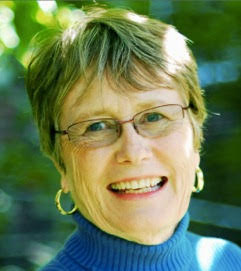
Endowed by two doctors who met in medical school and want to include 含羞草传媒 in their estate plan, the Rachel and Bruce A. Julian Scholarship will help yet another generation of chemistry majors follow their dreams.

Rachel Hendrickson Julian 鈥71 grew up in Clarkfield, a small southwestern Minnesota farming town where her father was the Lutheran minister and her mother an elementary school teacher. Both had attended Gustavus Adolphus College and valued education highly, although their finances could not cover college expenses for five children. Their oldest followed their footsteps, but the other four, including middle child Rachel, chose Augsburg for its more traditional values and culture.

Scholarship support was essential. A chemistry major, Rachel admired the school鈥檚 top ranking in that field as well as its excellent teachers. One of her favorite professors was Dr. John Holum, who taught chemistry from 1957 until his 1993 retirement and was known for his kindness and generosity as well as teaching excellence and commitment to service. He inspired many, including Rachel鈥檚 classmate, Peter Agre 鈥70, who later won a Nobel Prize in the field.

But Rachel soon found that one major was not enough. She added music.

鈥淚 wanted to go to medical school, but I also starting taking organ lessons. I had played piano since I was 6, and I fell in love with the organ. It was practical, too, since I could earn extra money playing on weekends,鈥 she says. 鈥淚 was very, very busy.鈥

Armed with her double major and again aided by scholarships, Rachel earned her M.D. at Washington University School of Medicine in St. Louis. 鈥淢y med school preparation at Augsburg was very good. It not only helped me get in, but also prepared me to thrive in that environment,鈥 she says. It was there that she met her husband, Bruce, an Indiana native with similar values and background.

鈥淲e have always been interested in education,鈥 says Bruce, the grandson of a Methodist minister. 鈥淢y father was an adjunct college professor, and although my mother did not complete college, she was a stickler for grammar and word choice. She used to cringe at newscasters.鈥 He notes that Rachel鈥檚 siblings also 鈥渟peak fondly and highly of Augsburg, which is literally in the shadow of the University of Minnesota. But any school with a Nobel winner must have something going for it.鈥 In addition to Augsburg, the couple will donate to their medical school alma mater as well as Berea College, which serves Appalachia area students and is located near Lexington, Kentucky, where the Julians completed their medical training and practiced for several years.

Affiliated with the University of Alabama Birmingham since 1984, Bruce is a professor emeritus of medicine in nephrology and Rachel an assistant professor of psychiatry. They have four children and four grandchildren. Rachel is also an ordained Methodist minister who serves in the church-sponsored counseling center and still plays the organ, too, monthly at the local Lutheran church and yearly in a family recital that includes her older son on piano, her older daughter on organ, and one of their twins on French horn.

Rachel returns occasionally to Augsburg, such as in 2013, when she served on a science symposium panel. 鈥淭he campus has changed a lot. Some of my old haunts, like the organ studio, are gone now. But I am amazed at the serious research the students are doing now, and doing very well,鈥 she says, recalling her participation in summer research programs. 鈥淚t goes way beyond anything we could have imagined. It really matters for something.鈥

And for a future chemistry student who needs financial help, the Rachel and Bruce A. Julian Scholarship will really matter, too.
Augsburg Roots Spring A Generous Heart in Arlan Oftedahl ’64

After a lengthy career as an educator, Arlan Oftedahl ’64 has settled in Inman Park on Atlanta鈥檚 east side, where he lives comfortably in a century-old, Craftsman-style house. He recently planted 500 tulips in preparation for a springtime show of color in the historic district that he calls home. In another era, he might have become a landscape architect, but in this one, he is content to value beautiful surroundings, which is just one of the reasons he has chosen to donate to 含羞草传媒.

Oftedahl, who shares a common heritage with Augsburg鈥檚 third president, Sven Oftedal, has given serious thought to why he will include Augsburg in his estate plan. In addition to campus beautification, he cites his support for quality education and small liberal arts colleges as well as paying tribute to his Norwegian heritage.

鈥淚 grew up in northern Minnesota on land that my grandfather homesteaded in 1901. He emigrated from Norway in 1881, when he was 23 years old, and he lived right next to Augsburg,鈥 says Oftedahl, who gleaned the street address from letters his grandfather mailed to relatives in Norway. Those letters were saved, and Oftedahl, having absorbed Norwegian while growing up on the family farm in Bagley, translated them. He is also a frequent visitor to his ancestral digs; he was there 2017 to celebrate Syttende Mai, Norway鈥檚 independence day.

鈥淚 have feelings for my Norwegian heritage,鈥 he says, and his genealogical research shows that he indeed shares roots with Sven Oftedal, although his grandfather added an 鈥渉鈥 to the spelling of their surname when he homesteaded in Clearwater County. Arlan Oftedahl was the second in his immediate family to attend Augsburg, accepting the encouragement and help of his cousin, Harlan Christianson 鈥57. Because his family lacked financial means, Oftedahl combined a part-time job with scholarship assistance to pay his own way through college, including rent in an older house he shared with fellow students. Thriftiness and hard work sufficed, and the experience was a fulfilling one.

鈥淚 got a very good education. Because it was a small campus, I got to know my professors. They invited me to their homes and encouraged me to make the most of my education and abilities,鈥 he recalls. An English major, he earned a Master鈥檚 degree and taught at the University of New Orleans (then part of Louisiana State University) before shifting to special education and teaching in Fulton County, Georgia, for more than 20 years.

He enjoyed the sense of educational community that Augsburg provided and that he worries may vanish as small liberal arts colleges disappear.

鈥淎 small liberal arts college may not be for everyone, but for me, and for a lot of other people, it was a wonderful way to get an education,鈥 he explains. 鈥淚 experienced much personal growth because of that environment, and the teachers made a real effort to open my mind and make me think. I felt supported.鈥

As a donor, Oftedahl has designated a scholarship for an English major with a Norwegian background as well as a gift to endow Augsburg鈥檚 Urban Arboretum. A beautiful natural environment is part of the small liberal arts college experience, he contends. 鈥淢ost of these colleges are in smaller towns, in an almost idyllic kind of setting. They are not just a collection of buildings,鈥 he says. 鈥淟arge trees and walkways between buildings are particularly important in a city. The real advantage of Augsburg鈥檚 location is that it owns land that could become a park-like setting, instead of just a campus crammed between high-rise buildings.鈥

While some students in Oftedahl鈥檚 time found the extremely conservative religious culture alienating, Augsburg has progressed in many ways since then, he adds. 鈥淚t鈥檚 more in tune with the rest of society, even as its identity remains tied to the Lutheran church and Christianity, which will be around for a long time in one form or another,鈥 he says. 鈥淢y reasons for donating may be more rational than emotional, but I feel good about making a financial contribution to Augsburg鈥檚 future.鈥

Torstenson Scholars Program and Donor Mark Johnson 鈥75 Make Research in the South Pacific Possible

Briana Mitchell 鈥19, Britta Andress 鈥19, and Sociology Professor Tim Pippert in Vanuatu

When Augsburg sociology professor Tim Pippert circulated an email last spring inviting his students to apply for a research opportunity in the South Pacific, at least two of them thought of the trip as little more than a fantasy. Yet Briana Mitchell 鈥19 and Britta Andress 鈥19 applied anyway.

鈥淚t was very random for me,鈥 Andress says about receiving that unsolicited email. But she was intrigued by the fact that whoever was chosen to go to Vanuatu, a nation comprised of about 80 islands that stretch 1,300 kilometers in the Pacific Ocean, could research whatever they wanted. She also knew she would have the whole summer to prepare.

鈥淚 was super pessimistic,鈥 says Mitchell, who doubted she would be chosen because she was a 鈥渃ity girl, always doing city things. I鈥檓 not very outdoorsy. I鈥檓 a scaredy cat, and I鈥檇 heard there were spiders the size of dish plates. But when I got chosen and knew I was going with Britta, I figured she would take care of those spiders.鈥

Thanks to the Torstenson Scholars Program and the ongoing generosity of Mark Johnson 鈥75, a retired city planner and former president of Sonju Motors in Two Harbors, Minnesota, the two were about to embark on a life-changing, career-molding adventure. Since a chance encounter with the King of Tanna several years ago, Johnson has actively supported various initiatives on the island of Tanna, which was damaged by a cyclone in 2016. A solar project to supply electricity to the island鈥檚 20,000 residents is currently underway.

Last September Mitchell and Andress, accompanied by Pippert and Johnson, flew nearly 30 hours to reach the island some call the 鈥渉appiest place on earth.鈥 For Mitchell, it conjured images of Jamaica, where her mother grew up. 鈥淲hen we got there, it had this paradise feel. Everything looked very good. The people were extremely happy, personable, and introduced themselves immediately.鈥 As a black woman traveling abroad, she also noted, it was nice to be the one who fit in.

The Augsburg group including Mark Johnson ’75 and two locals who helped translate.

It wasn鈥檛 long, however, before the budding sociologists realized that solar lighting and happiness were not the topics that most interested them or their hosts. 鈥淕ender dynamics was a big issue. Behind this happiness were a lot of problems, so we decided to focus on the smaller ones and how they contributed to the larger ones,鈥 Mitchell says. A female translator was secured so the island women could speak freely about their lifestyle and culture.

Life in Tanna is 鈥渄rastically different. There is no agenda, and the pace is very laid back鈥攖hey call it Tanna time. They don鈥檛 have an official economy and everything is free,鈥 says Andress, describing a system known as cargo cult, where islanders depend on donations they believe will show up as needed.

The researchers conducted 26 interviews, exploring everything from medical care to food preparation to the ritual daily consumption of kava, a hallucinogenic beverage for men only. They questioned how solar lighting might impact women whose workdays were already long, and whether harsh, unsanitary childbirth conditions could be improved. They identified 13 themes in the study they will present at the Midwest Sociological Society conference in Chicago in April.

Briana and Britta doing research with the help of local Peace Corps volunteer Christy Kosak.

鈥淏ecause of how fast it went and the amount of information we absorbed in those days, I now see everything through a more critical lens,鈥 says Andress. Her experience has impacted how she interviews people, how she frames questions, and how she evaluates the research itself. 鈥淚 see how vital it is, and I developed skills I knew I needed.鈥

Johnson understands completely. “I had the good fortune to participate in Joel Torstenson’s first聽Scandinavian Urban Studies term聽when I was a student at Augsburg. That experience was transformational, opening my eyes to a global context that has shaped my life,鈥 says Johnson, who was named to Augsburg鈥檚 Board of Regents in 2018. 鈥淚’m interested in making sure that today’s Auggies have the same opportunities.”

鈥淚t was an amazing opportunity, and so kind of alumni to use their own time, effort, and funds to support students like me, who hadn鈥檛 done research or traveled abroad,鈥 says Mitchell. Even simple things鈥攍ike the gift of a six-foot-tall stick of sugar cane, which she hadn鈥檛 sampled since visiting Jamaica as a young teen鈥攎ade the visit 鈥渁 wonderful experience鈥 that also prompted a closer connection with her mom. She hopes to return one day.

鈥淚t鈥檚 surreal that it even happened, and it鈥檚 something I will always reflect on,鈥 she adds. 鈥淚 was living my best life there. It feels like a dream, still.鈥

The Nathan R. Schott Scholarship Fund Surpasses $100,000

Nathan Schott in his senior year at Maple Grove High School (left). (L to R): Teri Schott, Alexandra Stoiaken 鈥13, and Chuck Schott at the 2011 brunch for Augsburg scholarship donors and recipients.

Nathan Schott 鈥13 spent only a short time on campus at Augsburg, but it was both active and memorable. The Maple Grove Senior High School graduate was an avid sports fan and Twins season ticket holder who wanted to major in English and become a sports writer. Because he also had muscular dystrophy and was confined to a wheelchair, one of his counselors recommended Augsburg for its ease and accessibility.

鈥淲e hadn鈥檛 heard too much about Augsburg, so we set up a tour. It was one of the first places we visited, and when we saw what sort of help Nathan would get, we thought this must be the place,鈥 his mother, Teri, recalls. Augsburg鈥檚 CLASS (Center for Learning and Accessible Student Services) program is designed to help those students who need extra help, whether they are coping with autism, ADHD, mental illness, learning disabilities, or a chronic health condition like Nathan鈥檚. The services are broad, ranging from securing appropriate accommodations to helping with time management, course selection, and any other challenges that might be better met with individual support.

鈥淥n a typical day, I drove him to school and dropped him off, then stayed on campus while he went to classes on his own,鈥 Teri says. Nathan made friends. He used underground tunnels to get around. Helpers took notes in his classes and filed them where he could pick them up. The late 鈥淧astor Dave鈥 Wold took Nathan under his wing and made sure there was a parking space behind the church for the family car.

鈥淚t seemed like everyone wanted to assist him, and he felt like it was a good place to be,鈥 says Nathan鈥檚 father, Chuck. 鈥淚t wasn鈥檛 easy to go into that type of environment with that many students and be accepted for his disability, but he was very comfortable there. He was always eager to get to class in the morning, and he often went back at night for lectures and other functions. He enjoyed it.鈥

During spring break of his first year, however, Nathan, the oldest of the Schotts鈥 three children, contracted pneumonia, from which he never recovered. He died on April 1, 2010. His family received many sympathy notes from Nathan鈥檚 Augsburg friends and their parents. They grieved, but in their grief, they wanted to do more.

鈥淲e wanted to do something to honor Nathan and keep his memory alive,鈥 says Teri. 鈥淢y older sister, Mary Rose, actually got the ball rolling. We had planned a tour of Augsburg, and she set up a meeting with Doug Scott, Augsburg鈥檚 director of leadership gifts, without telling us.鈥 After conferring with Scott, the Schotts decided to establish the Nathan R. Schott Scholarship Fund and donated the initial $25,000 to set it up. Since both Teri and Chuck are the youngest of seven siblings, reaching out to extended family for support made perfect sense.

鈥淲e are so pleased that the endowment has now gone over $100,000 and will continue to grow,鈥 says Chuck. Designated for CLASS program participants, the scholarship fund has already helped eight students.

The couple, who moved to Hendersonville, Tennessee, two years ago, are grateful for the close connections they maintain with Augsburg. They named their new miniature dachshund puppy Auggie Doggie. They welcomed Scott for a visit to their new city. They have also attended past scholarship luncheons and met with some of the students they have helped.

鈥淗earing about past scholarship recipients and what they have achieved must give those students such a great feeling and sense of accomplishment,鈥 Chuck notes. 鈥淔or us as donors, it is so rewarding to learn of their successes. To be able to lessen their cost burden by providing financial aid means so much. We are very proud to be able to provide this scholarship to the students.鈥


Funding Research and Accelerating Creative Learning with URGO

The Office of Undergraduate Research and Graduate Opportunity (URGO) connects students with new and existing summer-long research and scholarship on campus, across the U.S., and internationally. URGO also assists students applying for graduate school, professional school, and national fellowships and scholarships. In 2017鈥18, 88 students conducted research with a faculty member, 23 of which were sponsored by donors.

Through the URGO office, Augsburg鈥檚 annual Zyzzogeton Research Symposium on April 15 will showcase the work of over 80 undergraduate researchers in all academic disciplines.

Recent Research from URGO students:

OLIVIA HOUSE 鈥20
Major: Graphic Design Marketing
Research: Exploring design aesthetic of Civil Rights Movement and its influence on current activism design

ZACH JUAIRE 鈥18
Major: Exercise Science
Research: Investigating the relationship between hip mobility and body mechanics of running strike to develop an injury prevention strategy

HOLLY KUNDEL 鈥18
Major: Biology
Research: Studying dragonflies as markers of health of Minnesota lakes, with implications for climate change

LEAH PATRICK 鈥18
Major: Biology
Research: Seeking drought- and insect-resistant genes in wild relatives of barley, with implications for food security and climate change

SKYE RYGH 鈥20
Major: Communication Studies
Research: Analyzing scientific, environmental, and crisis communication used to target Native American residents regarding Line 3 pipeline proposal in Minnesota鈥檚 Iron Range

Opportunities for URGO research are made possible by the generosity of our donors. Thank you:

Thomas 鈥78 and Julie Bramwell
Linda (Lundeen) 鈥74 and Douglas Dunn
Robert and Jenny Florence
Drs. Karthik and Amit 鈥12 MBA Ghosh
Sharon (Dittbenner) 鈥65 and Richard Klabunde
Bruce 鈥64 and Connie Langager
Steve 鈥72 and Catherine Larson
Terry 鈥73 and Janet Lindstrom
Jean Lingen
Carl Obert 鈥85
SarTec Corporation
D and J Stottrup Education Fund
Leland and Louise Sundet
Dean 鈥81 and Amy Sundquist
Noreen (Walen) 鈥78 and Stephen 鈥78 Thompson

Gracia 鈥66 and John 鈥65 Luoma Honor Augsburg Family Legacy for the Sesquicentennial

John 鈥65 and Gracia 鈥66 Luoma

For Gracia 鈥66 and John 鈥65 Luoma, the Augsburg Sesquicentennial marks not only a milestone for the University, but also a time to honor their own family legacy. These frequent donors have decided to celebrate by fully funding the John K. and Gracia Nydahl Luoma Endowed Scholarship with a $100,000 cash gift.

鈥淲e wanted to be proactive in our estate planning. We wanted to see the fruits of our legacy before we died,鈥 says Gracia, noting how financial help is essential for today鈥檚 young people. The scholarship will go to an undergraduate student who demonstrates financial need, academic achievement, and a commitment to vocational service, preferably in the Christian ministry, education, psychology, or medical fields.

鈥淓mphasizing vocation for service has always been part of Augsburg鈥檚 vision,鈥 John points out.

And Augsburg, adds Gracia, has long been 鈥渢he family business, so to speak.鈥 Born in Minneapolis to the Nydahl family, she recalls frequent outings to Augsburg events as a young child. Her grandfather Johannes, who emigrated from Norway in 1845, graduated from both Augsburg College and Augsburg Seminary, which he attended from 1883 to 1891. He became a professor of history and Norwegian before becoming Augsburg鈥檚 head librarian in 1920 and was also a member of the Augsburg Quartette, as was his son, Harold. Johannes and his wife, Tabitha, had six children, all of whom followed his footsteps, as have many other descendants. In fact, Augsburg recognized this 鈥渇ormative family鈥 with a Distinguished Service Award in 2004.

鈥淭hat I would attend Augsburg was never a question,鈥 says Gracia, a math major who forged a career in computer science. Nor was it a question that she, as well as her prospective husband, would rank service high among their career goals. 鈥淓ven in the business world, you can have a sense of service in vocation. You don鈥檛 have to be in a formal ministry to serve God and serve Christ,鈥 she says.

John Luoma, the boy she first met in Luther League and later dated and married while in college, learned of Augsburg through his affiliation with Trinity Lutheran Church. In his quest to become a pastor, he never considered going elsewhere. Fully committed and active on campus, he was elected student body president in his senior year. After receiving his Ph.D. in theology, he served as a college and seminary professor and Lutheran parish pastor for more than 40 years.

鈥淎ugsburg was very formative for us in those years. It built on the values we鈥檇 had as young people, strengthening them, testing us, and preparing us very well for our vocations,鈥 Gracia says.

The couple had two sons, both of whom also chose service vocations. Aaron, who died suddenly from an undiagnosed heart defect in 2015, was an occupational therapy assistant, international traveler, and frequent volunteer who worked with immigrants, refugees, and hospice patients. Jason is a clinical psychologist in Portland, Oregon. Neither had children.

鈥淥ur son is fine financially, and we have no grandchildren, which started me thinking: I would like to leave a legacy. Even on my mother鈥檚 side, there was always a commitment to service for others,鈥 says Gracia.

The Luomas raised their family in Connecticut and Ohio before moving to their current residence in Lady Lake, Florida, but they return to Minnesota every summer to escape the heat. Now retired, they are able to visit Augsburg regularly, attending their class reunions and the annual Nydahl cousin reunion, usually timed to coincide with homecoming. They have reacquainted themselves with the current administration and reaffirmed their confidence in Augsburg鈥檚 vision. While the neighborhood and student population may have changed in recent years, the basic values have not.

鈥淎 lot of schools do not bring up their religious connection. I like that Augsburg is still proud of being a Lutheran college without being pushy about it,鈥 says John, who has served on the ELCA Board of Education. Adds Gracia: 鈥淚t has a unique place among Lutheran colleges. It does a lot to reach out to businesses and the community, and to make that connection between education and serving in an urban environment.鈥

A Big Opportunity for a Big Milestone

The Sesquicentennial Scholarship is a new, unrestricted scholarship created to celebrate the 150th anniversary of the founding of 含羞草传媒. This fund will support students in financial need.

Why endowments?

  • You鈥檒l see how your contribution makes a difference in the learning and life trajectory of real students in the Augsburg community. As a donor, you鈥檒l have the opportunity to meet the scholarship鈥檚 recipients during Augsburg鈥檚 Sesquicentennial festivities in 2019鈥20.
  • Your gift today is a way you can stay connected to Augsburg throughout your lifetime. Donors will also be recognized on campus on the Sesquicentennial Scholarship Fund donor wall.

Celebrate the Sesquicentennial by supporting students

  • Over 200 donors have already contributed more than $110,000 to the Sesquicentennial Scholarship.
  • All donors who give receive annual reports on the overall value of the fund, contributions, market growth, and scholarship recipients.
  • Early contributions like yours will spark more potential for Augsburg students, the community, and the enduring legacy of inspired education. Make a gift to the Sesquicentennial Scholarship at augsburg.edu/giving.


From Nursing Major to Fulbright Scholar in Norway: How Donor Sandra Simpson Phaup ’64 was Shaped by Augsburg

SANDRA SIMPSON PHAUP 鈥64
Sandra Simpson Phaup.
Photo by: Duy Tran Photography

She called herself Sandy Simpson from Spicer back then, and her journey from aspiring Willmar High School student to generous 含羞草传媒 donor was as lively and adventurous as Sandra Simpson Phaup 鈥64 is today.

Her college-educated parents were trained as teachers, so it was no surprise that Phaup planned to go to college. But her first-choice school cost too much, and her enrollment at Lutheran Bible Institute was short-lived. Her goal of becoming a nurse landed her on the Augsburg campus, where she got a small scholarship and found a welcoming home she had not anticipated.

Imagine her surprise when a professor in the theater department allowed her to keep her bicycle in the old theater. 鈥淚 found living in the city a little confining after being in the country, so she gave me a key,鈥 recalls Phaup. 鈥淎nd I had Professor Philip Thompson for art, which I loved.鈥

Slowly but surely, she found her way. Though she had made a pact with her parents to earn a nursing degree, her sophomore chemistry class 鈥渇elt like they were all speaking Russian鈥擨 never grasped it,鈥 she says. So without consulting mom and dad, she transferred out, signing up for a 17th-century聽British literature class instead. English and teaching became her major and art her minor, but she also pursued an interest in Norwegian language and culture sparked by the Norwegian grandparent who moved in with the family while she was growing up. She read Nobel Prize writer Knut Hamsun and Ole Edvard R枚lvaag鈥檚 Giants in the Earth. She carried a small notebook to record Norwegian words.

Her teachers picked up on her ongoing fascination. 鈥淲hen art topics were assigned, we didn鈥檛 get to pick. My friends got Monet and Renoir and I got Edvard Munch. I thought, 鈥榳hat am I going to do with this German expressionist?鈥 Two days before the paper was due, I hadn鈥檛 even started. I rode my bike to the Minneapolis library, checked the card catalogue, and found out he was Norwegian! I was so excited I did nothing but read about him,鈥 she says. 鈥淚t was life-changing. Augsburg professors know their students really well.鈥

As a sophomore, Phaup asked a Norwegian family friend in Spicer to help her move to Norway for a year, but her parents insisted that she finish college first. As a senior, she was registering for classes when a friend reported that their English professor had suggested she apply for a Fulbright scholarship. 鈥淲hat鈥檚 that?鈥 was her first response. But she applied, was accepted, and arrived in Norway鈥斺渟o focused and full of myself鈥濃攖he following year. There she met relatives she hadn鈥檛 known existed as well as her husband-to-be, a Fulbright scholar pursuing an economics Ph.D.

At home in Arlington, Virginia, since 1976, Phaup earned a master鈥檚 degree and taught English and art for 30 years in England, Ohio, and Salem, Virginia, where her lively embrace of all study topics, from Bob Dylan to Allen Ginsberg, made her a favorite among students who still invite her to reunions. As a Kennedy Center teaching artist, she is occasionally invited to lead teacher workshops that integrate visuals arts and writing.

鈥淚 feel like I鈥檝e really been blessed,鈥 Phaup says, 鈥渁nd I thank Augsburg for making that happen. That鈥檚 why I have been donating every year.鈥 She describes her gifts as an 鈥渙ffering of thanksgiving for what my experience was,鈥 although she realizes that today鈥檚 students will have quite different experiences. 鈥淎ugsburg is thriving where it is, serving a unique population, and I very much support the notion of serving that community,鈥 she adds. 鈥淎ugsburg is doing important work in the world.鈥

Donors Seek to Remove Cost as a Barrier to Education with the Paul ’84 and Nancy Mackey ’85 Mueller Presidential Scholarship

Nancy Mueller, President Paul Pribbenow, and Paul Mueller. Photo courtesy of Coppersmith Photography.

Ask Nancy Mackey Mueller 鈥85 about her family鈥檚 planned giving history and philosophy, and her answer will be succinct: 鈥淲e鈥檙e all in.鈥

Indeed they are, for reasons that both she and her husband, Paul Mueller 鈥84 articulate clearly. Their commitment goes deep. Paul served on the Augsburg Board of Regents for 12 years and currently chairs Great Returns: Augsburg鈥檚 Sesquicentennial Campaign. Nancy was named to the Board in 2018. They have donated often over many years, including a previous bequest to support the Hagfors Center for Science, Business, and Religion, and most recently designated a planned gift to create the Paul ’84 and Nancy Mackey ’85 Mueller Presidential Scholarship, valued at $1,000,000.

鈥淲e both felt that our experience at Augsburg gave us the keys to success for our future,鈥 explains Nancy. Their college experience was not only positive but also rigorous, preparing them for challenging graduate work and distinguished careers. 鈥淲e were both encouraged in different ways. As the only woman in the physics department at the time, I was always very much supported. I never felt I had to prove myself any more than the guys in my major, and that gave me the confidence to stretch myself.鈥

Coming to Augsburg

Nancy became a structural engineer, earning a master鈥檚 degree in aerospace engineering at the University of Maryland and helping the U.S. Navy design submarines before eventually becoming a physics and chemistry teacher at Mayo High School in Rochester. She had followed her father and her aunts to Augsburg, where she first met her future husband when she was a nervous sophomore tutoring juniors and seniors in physics. He remembers being smitten; she remembers just trying to get through the intimidating hour. Dating came later, but the scene had been set.

鈥淲e have a deep affection for Augsburg. It鈥檚 where we met,鈥 Paul says. 鈥淲e also appreciate the values of the institution鈥攊ts academic rigor, its vision, its commitment to the Cedar-Riverside community. Augsburg transforms lives.鈥

Paul had already won a scholarship to the University of Minnesota when a visit to Augsburg鈥檚 campus altered his trajectory. Impressed by the warmth, welcome, and undivided attention he received that day, especially from chemistry professors, he chose Augsburg. Now-retired chemistry professor John Holum became his mentor and inspiration. Paul went on to earn his MD and MPH at Johns Hopkins University and is now an internist and professor of medicine and biomedical ethics at Mayo Clinic and the regional vice president of the Mayo Clinic Health System鈥擲outhwest Wisconsin.

What Sets Augsburg Apart

Both Muellers have fond recollections of Augsburg support and inclusion. 鈥淚t felt like family. Somebody was always looking out for you. If you missed class, the professor would see you later and ask where you were. That was one of the things that set Augsburg apart, then and now. No matter who you were, or what interests or inclinations you had, you felt very welcomed,鈥 Nancy says.

That Augsburg 鈥渧igorously retained its Lutheran heritage while at the same time welcoming everyone is very important and appealing to us. It鈥檚 the idea that we are called to love and serve each other, without regard to personal characteristics such as race, religion, or sexual orientation,鈥 adds Paul. 鈥淚n today鈥檚 world, it seems like the focus is more on what separates us than what brings us together.鈥

He also notes that these days, more than half of the student population are people of color. 鈥淚t didn鈥檛 look that way when we were there, and I love that about it,鈥 he says.

Nancy points to the unusual number of programs designed to help students with special needs and talents, from StepUP to URGO. 鈥淎s parents, we鈥檝e been on many college campus tours, and nowhere else offers the programs that Augsburg does,鈥 she says. 鈥淚t鈥檚 a unique place, and we so believe in their mission.鈥

Their oldest son, Luke, majored in math and history at Augsburg before pursuing a graduate degree in statistics from Harvard. His mother notes that his presidential scholarship made a big difference to him, both financially and by providing opportunities he may not otherwise have had. Endowing such a scholarship for future generations made perfect sense.

鈥淩emoving cost as a barrier to education鈥攖hat was our intent,鈥 Paul says. 鈥淲e very much wanted Augsburg to be able to attract top-notch students without regard to expense. To have brilliant, talented, gifted students be able to come to Augsburg without having to worry about how to pay for their college education? Now that is changing lives.鈥

Bruce Olson ’71 Pays it Forward with Olson Peterson Wiggins Scholarship

Bruce Olson ’71 (center), his brother Brad Olson ’73 (left), and scholarship recipient Nick Thompson (right).

When Bruce Olson 鈥71 was a youngster in Brooklyn Center, he was not sure what he wanted to be when he grew up. He was sure of a couple of things, though. Active in the Lutheran church, he knew he wanted to attend a Lutheran college, and he preferred being in the city, where 鈥60s activism meant things were happening. He also knew that his rural extended family would support him fully, although they could provide little more than love and encouragement.

鈥淚 came from a family of modest means. I needed a lot of help,鈥 says Olson. He was grateful to receive an Augsburg legacy scholarship but wished he could have met his benefactors. 鈥淚 wondered about the history of it, but I never really knew,鈥 he recalls.

The financial cushion served him well. He participated in student government and played all four years on the golf team, which won both conference and state championships. He changed majors four times, abandoning religion after nearly flunking his first theology class, contemplating a future as a high school math teacher, succumbing to the inverse multiple-choice question challenges in his sociology exams, and, finally, plugging a gap one semester with an accounting class.

鈥淚 loved it,鈥 he says.

Accounting became his major and business his forte. Right out of college, he worked for a small mobile home finance company, then Josten鈥檚, then a series of successful entrepreneurial ventures in various fields, from insurance and computer services to light manufacturing and retail. He retired at 45 and moved to Florida to play golf, including with such luminaries as Arnie Palmer, but 10 years of retirement sufficed. Now a Kansas City resident, he is back at it, officially the owner and president of the HRS Group.

鈥淚 love the challenge of taking a new idea or a new product and making it work,鈥 he says.

Olson also loves the idea of establishing the Olson Peterson Wiggins Scholarship. It is named for his family, including his grandfather Olson, who owned the five-and-dime back in Afton, Iowa; his grandfather Peterson, the town mechanic and truck and tractor repair whiz in Tracy, Minnesota, where he was born; and his near and dear great uncle Walt Wiggins, Walnut Grove鈥檚 town barber, who offered shaves and haircuts there along the banks of Plum Creek. And it will grant $25,000 to someone like him.

Olson was delighted to meet the first recipient, Nick Thompson, when the initial $5,000 installment was awarded. 鈥淗e鈥檚 real nice, an athlete who plays baseball and a reasonably good student who aspires to become a physical therapist. But who knows? I told him I hoped he would be lucky enough to hold onto that dream but reminded him that it would be crazy to guarantee it.鈥

Olson hopes, too, that Thompson will enjoy the same Augsburg benefits he found: a good education, both academic and social, and important lessons about how to conduct one鈥檚 life. He also points to Augsburg鈥檚 growth and progress, demonstrated in part by the much-expanded economics and business department in the impressive Hagfors Center for Science, Business, and Religion.

鈥淚t鈥檚 a pay-it-forward sort of story,鈥 Olson says. 鈥淚 was lucky to come from a great family, get a good education, and have some success in life. Now I鈥檓 finding a way to honor my family by honoring somebody else in the same situation.鈥