bing pixel

含羞草传媒

Full Circle: Music Educator Duane Esterly ’75 Establishes Planned Gift to Augsburg’s Music Department

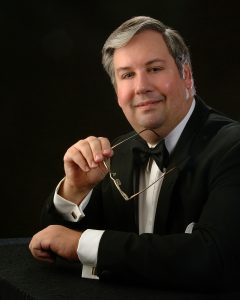
Duane EsterlyWith his planned gift to 含羞草传媒鈥檚 music department, Duane Esterly 鈥75 has come full circle in his musical life, helping to ensure that future students who share his passion can pursue similar dreams.

By the time he reached fourth grade, Esterly had teaching goals clearly in sight. A church choir director had named him a boy soprano and instilled in him a love for music, and his parents sang in the senior choir at Calvary Lutheran Church of Golden Valley, where he took organ lessons as a high school sophomore from the church organist. The senior choir at Calvary was directed by Dr. William Halverson, professor of philosophy at Augsburg from 1959 to 1967, and often performed anthems by Leland Sateren 鈥35, who headed Augsburg鈥檚 music department from 1950 to 1973 and directed the choir until retiring in 1979. By the time Esterly was ready to choose a college, it was evident that Augsburg was 鈥渁 good place to get a music degree.鈥

Such a pursuit was 鈥渃hallenging then. They had nowhere near the facilities they do now,鈥 Esterly recalls. In those days the music department was housed in a group of renovated churches deeded to Augsburg by dwindling congregations. Recitals were held in an old white church where one could also hear toilets flushing throughout the building. The organ studio was housed in a converted grocery store, and the band building was located across the freeway on Franklin Avenue in another former church with a questionable heating system during the winter months.

鈥淏y the time I graduated in 1975, I figured the college had better do something about their facilities in order to stay competitive,鈥 says Esterly.

His music education, however, was top-notch. He took voice lessons, sang in the choir, and learned much about choral technique, conducting, and interpreting text through music. As a senior, he directed the student production of Oklahoma, facing the formidable task of turning the old music building into a theater in a mere three weeks. He made good friends, such as Peter Hendrickson 鈥76, who became artistic director of the Masterworks Chorale and recruited Esterly, who sang for the Chorale from 1996 to 2015. 鈥淚鈥檓 very appreciative of the tools I learned while at Augsburg. They taught me quality, first and foremost,鈥 he says.

Esterly worked in sales administration, market research, training, and finance with such companies as Sandoz, Novartis, and Nestle for 35 years, but he never left music behind. For 27 years he taught privately鈥攁dults mostly, whom he deems often more difficult than elementary or high school students. He has held church music positions with various congregations throughout his working life, and, since retiring from the business world in 2016, he claims he is now 鈥渄own to one job.鈥 That means working with three different churches at present, fulfilling principal organist duties at each on alternating Sundays, directing a vocal choir and a handbell choir, and being on call for plenty of weddings and funerals.

When he is not working on choral arrangements for his choirs in his home office in Plymouth, Esterly fills his time with books, concerts, plays, flower and auto shows (in season), and dining out with friends. Because he has no children to inherit his financial legacy, he has chosen Augsburg鈥檚 music department as one of its worthy recipients. 鈥淚 am so pleased to see what鈥檚 happening there now. Almost all the professors I had are no longer living and my contemporaries are retiring, but I am very impressed with what I currently see,鈥 he says. 鈥淭heir degree of dedication is deep, and I believe in all the possibilities they can offer to the students to come.鈥

Two Students Find Support and Mentorship from Augsburg Women Engaged

Checking your email can get tedious, right? But for two Augsburg students, the digital chore yielded unexpected benefits. Informed that they had been selected as recipients of this year鈥檚 Augsburg Women Engaged (AWE) scholarships, they registered both shock and delight.

鈥淚 was very, very surprised. It was not something I had applied for, so I was very excited to hear I got it,鈥 says Nayra Rios 鈥20. After earning an associate degree at Century College in White Bear Lake, she decided to transfer to Augsburg to major in biopsychology, the next step on her way to becoming a physician鈥檚 assistant. Unfortunately, the deadline for obtaining a transfer scholarship had passed.

鈥淚 was disappointed, but I figured I would just have to find other ways to pay for school. Then a month later, this email arrived,鈥 Rios says. She was familiar with financial challenges. Her parents are laborers who grew up in Mexico but immigrated to California, where they met, married, and had three children. They moved to Minnesota when Rios was seven years old. She attended a charter school for Hispanic students before transferring to Tartan High school in Oakdale, a transition that carried its own culture shock. But Rios found friends and pursued academic success.

Although her older brother is now pursuing a degree in law enforcement, she was the first in her family to attend college. As a child, she had encountered health issues that scared her, but compassionate treatment relieved that fear; she has wanted to pursue a career in health care ever since.

鈥淢y parents always supported my dreams,鈥 she says. They had their own dreams鈥攈er mother wanted to be a nurse and her father a lawyer鈥攂ut lacked resources. In Mexico, she points out, families had to pay for everything related to school: books, uniforms, etc. These days, Rios helps support herself through her off-campus work with STAR Services, which supports young people with disabilities.

She has enjoyed meeting the women involved with AWE, which was formed in 2009 to unite women with shared interests and passions through events, mentorship, and philanthropy. 鈥淭hey are very kind, and they made me feel important,鈥 says Rios.

Her sentiments are echoed by Sydney Fields 鈥22, who describes her benefactors as 鈥渞eally cool.鈥 She, too, was surprised by the scholarship award, although she recalls meeting the person who recommended her through a multicultural diversity engagement group. A graduate of Champlin High School in Brooklyn Park, she chose Augsburg for its diversity, its proximity to home, and a chance to play on the basketball team. She is #10, a guard.

鈥淚 love playing at Augsburg. It鈥檚 such a welcome and supportive program,鈥 she says. And although she got good grades in high school and was expecting to work hard at college, she was not quite prepared for the amount of schoolwork she would encounter. Studying, on top of basketball practice and her work as a housing specialist, 鈥済ets really exhausting!鈥

With four older and two younger siblings, all of whom have or are pursuing some sort of college degree, Fields did come to Augsburg prepared with goals. Currently a finance major and management minor, she wants to launch two businesses. One would be a college prep class for teens, to help them prepare for the onslaught of responsibility she is discovering. The other would be a nonprofit 24-hour childcare center, designed for low-income families who need extra help because they work nights or have other scheduling challenges.

As she navigates her college years, Fields is grateful not only for the financial support AWE has provided, but also for the connection to people who understand the various situations she will experience at Augsburg. 鈥淲e participants know we have a resource in this group of women. They will help us with anything we need.鈥

Accessibility to Education and an Open Community Inspires Graves Family Endowed Scholarship

Sam ’16, Hazen and Kathy Graves with President Pribbenow at their scholarship signing.

When Hazen and Kathy Graves toured Augsburg with their son, Sam Graves 鈥16, they immediately felt they had found the right place. 鈥淲e were totally impressed,鈥 says Hazen, a retired partner at the Faegre Baker Daniels law firm, where he advised nonprofit organizations and handled legal matters related to charities and charitable giving. 鈥淛ust walking through the campus, we found students very respectful, friendly, and eager to engage.鈥

They also found that Augsburg offered the unique assistance Sam needed as a young man with cerebral palsy who uses a power wheelchair. 鈥淎s we learned more about the support Augsburg offers to students with various kinds of challenges, we came to understand that Augsburg had been doing this for a long time, long before ADA,鈥 says Hazen. 鈥淭he University鈥檚 attitude鈥攖hat鈥檚 the way the world is, here we all are, let鈥檚 get on with it鈥攃ame through loud and clear, and it was reinforced as Sam went through four years there,鈥 he adds.

Education is a high priority for the Graves family. Sam had a very good experience at Minneapolis South High School, where he excelled in academics and played in South鈥檚 robust adapted athletics program. After graduation, however, the choices were more difficult.

鈥淪am is very bright and has always done well in school. One of our goals was to make sure he could really capitalize on that,鈥 says Hazen. He and his wife, Kathy, a principal in the communications and planning firm of Parenteau Graves, quickly learned that not every higher education institution was able to鈥攐r even seemingly wanted to鈥搒erve students with physical disabilities.

A tour of Augsburg was all it took. Sam agreed with his parents鈥 assessment and enrolled in 2012. He graduated with a degree in psychology in 2016. Now 26, Sam manages social media and creates digital content for the Minneapolis-based technology company Accessible360. He fondly recalls Augsburg鈥檚 CLASS program as well as his favorite teachers, Michael Lansing, Bill Green and especially his advisor, psychology professor Bridget Robinson-Riegler. 鈥淪he was really fun and really, really smart. Plus she talked about the Twins a lot,鈥 Sam says. An ardent sports fan, he is the co-author of the baseball blog 鈥淭wo Men On.鈥

Sam鈥檚 parents applaud Augsburg鈥檚 鈥済reat services, great students, great faculty, and great accommodations made for those with disabilities. And they appeared happy to provide them,鈥 Hazen says. 鈥淲e had the overarching feeling that Augsburg embraced differences and made sure everyone has an opportunity to get a good education.鈥

The idea of supporting Augsburg financially occurred to both Hazen and Kathy independently, and they decided to donate $50,000 to endow a scholarship. 鈥淭his is the most open community that I鈥檝e experienced anywhere, with the possible exception of South High, and it鈥檚 pretty clear that this attitude permeates the place,鈥 adds Hazen. 鈥淎ccess to higher education is a big issue, and we鈥檙e just doing our little part.鈥

Gracia 鈥66 and John 鈥65 Luoma Honor Augsburg Family Legacy for the Sesquicentennial

John 鈥65 and Gracia 鈥66 Luoma

For Gracia 鈥66 and John 鈥65 Luoma, the Augsburg Sesquicentennial marks not only a milestone for the University, but also a time to honor their own family legacy. These frequent donors have decided to celebrate by fully funding the John K. and Gracia Nydahl Luoma Endowed Scholarship with a $100,000 cash gift.

鈥淲e wanted to be proactive in our estate planning. We wanted to see the fruits of our legacy before we died,鈥 says Gracia, noting how financial help is essential for today鈥檚 young people. The scholarship will go to an undergraduate student who demonstrates financial need, academic achievement, and a commitment to vocational service, preferably in the Christian ministry, education, psychology, or medical fields.

鈥淓mphasizing vocation for service has always been part of Augsburg鈥檚 vision,鈥 John points out.

And Augsburg, adds Gracia, has long been 鈥渢he family business, so to speak.鈥 Born in Minneapolis to the Nydahl family, she recalls frequent outings to Augsburg events as a young child. Her grandfather Johannes, who emigrated from Norway in 1845, graduated from both Augsburg College and Augsburg Seminary, which he attended from 1883 to 1891. He became a professor of history and Norwegian before becoming Augsburg鈥檚 head librarian in 1920 and was also a member of the Augsburg Quartette, as was his son, Harold. Johannes and his wife, Tabitha, had six children, all of whom followed his footsteps, as have many other descendants. In fact, Augsburg recognized this 鈥渇ormative family鈥 with a Distinguished Service Award in 2004.

鈥淭hat I would attend Augsburg was never a question,鈥 says Gracia, a math major who forged a career in computer science. Nor was it a question that she, as well as her prospective husband, would rank service high among their career goals. 鈥淓ven in the business world, you can have a sense of service in vocation. You don鈥檛 have to be in a formal ministry to serve God and serve Christ,鈥 she says.

John Luoma, the boy she first met in Luther League and later dated and married while in college, learned of Augsburg through his affiliation with Trinity Lutheran Church. In his quest to become a pastor, he never considered going elsewhere. Fully committed and active on campus, he was elected student body president in his senior year. After receiving his Ph.D. in theology, he served as a college and seminary professor and Lutheran parish pastor for more than 40 years.

鈥淎ugsburg was very formative for us in those years. It built on the values we鈥檇 had as young people, strengthening them, testing us, and preparing us very well for our vocations,鈥 Gracia says.

The couple had two sons, both of whom also chose service vocations. Aaron, who died suddenly from an undiagnosed heart defect in 2015, was an occupational therapy assistant, international traveler, and frequent volunteer who worked with immigrants, refugees, and hospice patients. Jason is a clinical psychologist in Portland, Oregon. Neither had children.

鈥淥ur son is fine financially, and we have no grandchildren, which started me thinking: I would like to leave a legacy. Even on my mother鈥檚 side, there was always a commitment to service for others,鈥 says Gracia.

The Luomas raised their family in Connecticut and Ohio before moving to their current residence in Lady Lake, Florida, but they return to Minnesota every summer to escape the heat. Now retired, they are able to visit Augsburg regularly, attending their class reunions and the annual Nydahl cousin reunion, usually timed to coincide with homecoming. They have reacquainted themselves with the current administration and reaffirmed their confidence in Augsburg鈥檚 vision. While the neighborhood and student population may have changed in recent years, the basic values have not.

鈥淎 lot of schools do not bring up their religious connection. I like that Augsburg is still proud of being a Lutheran college without being pushy about it,鈥 says John, who has served on the ELCA Board of Education. Adds Gracia: 鈥淚t has a unique place among Lutheran colleges. It does a lot to reach out to businesses and the community, and to make that connection between education and serving in an urban environment.鈥

Augsburg Then and Now: Why Tom Peterson ’69 Gives to the Clifford A. Peterson Scholarship

The difference between college then and college now is a key factor that motivates Tom Peterson 鈥69 to honor his father by contributing regularly and often to the Clifford A. Peterson Scholarship endowment fund.

鈥淎 small scholarship throws off enough to buy books. I would like to get to where I can make a material dent in someone鈥檚 tuition,鈥 Tom Peterson says. He figures it takes about a million dollars to fund an endowment that pays for one person鈥檚 full scholarship each year, and he speaks with a deep knowledge of finance. As former chief investment officer for the Good Samaritan Society, he was in charge of two privately held mutual funds and managed $1.5 billion in capitalization.

He was not, however, an academic star. 鈥淚 was an extraordinarily ordinary high school and college student, with average grades at best,鈥 Tom recalls. He grew up in Richfield and initially enrolled at Bemidji State University, which invited him to play on its tennis team. He studied hard there but again earned only average grades, and the tennis team鈥檚 mediocre performance coupled with the frigid climate convinced him to move closer to home and enroll at Augsburg, his father鈥檚 alma mater.

鈥淢y father always held Augsburg in high regard. He used to drag us kids along to basketball, football, and baseball games,鈥 Tom says of Clifford Peterson 鈥49, whose successful career included marketing stints at Standard Oil and SuperAmerica as well as nursing home administration in later years. Tom鈥檚 younger brother, Jim Peterson 鈥78, was inducted into the Augsburg Hall of Fame for his prowess in both baseball and hockey.

At Augsburg, Tom majored in finance and sociology and played for two years on winning tennis teams, which placed second in the conference. (His son, Christopher Olson 鈥91, later lettered four times in tennis at Augsburg.) Tom also graduated in four years with no debt, an accomplishment that seems impossible today. That was college then, when tuition was $1200 a year.

鈥淚 put myself through Augsburg, had an apartment off campus, and paid for it all myself,鈥 he says. 鈥淚 had one of the best jobs a student could have at that time鈥擨 drove truck.鈥 He made deliveries throughout the state, working 30 hours a week during school and 60 hours a week during summers and breaks. When he graduated and got his first job as an accountant at Honeywell, he almost had to take a pay cut (but got to work a shorter, 40-hour week).

Even though he would sometimes come home too tired at night to study, he found time to connect with and admire his sociology professor, Joel Torstenson, and several adjunct business professors, one of whom he later mentored in the business world.

鈥淚 had good teachers, and they were fun people to be around. Here鈥檚 the thing: I felt comfortable there,鈥 Tom says. Now retired and living in Edina, Minnesota, where long walks with his dog have replaced tennis, he recalls, with fondness, those college days in the past. He also remains committed to ensuring that students will be able to meet the financial challenges and enjoy the faculty support at Augsburg in the future.

From Nursing Major to Fulbright Scholar in Norway: How Donor Sandra Simpson Phaup ’64 was Shaped by Augsburg

SANDRA SIMPSON PHAUP 鈥64
Sandra Simpson Phaup.
Photo by: Duy Tran Photography

She called herself Sandy Simpson from Spicer back then, and her journey from aspiring Willmar High School student to generous 含羞草传媒 donor was as lively and adventurous as Sandra Simpson Phaup 鈥64 is today.

Her college-educated parents were trained as teachers, so it was no surprise that Phaup planned to go to college. But her first-choice school cost too much, and her enrollment at Lutheran Bible Institute was short-lived. Her goal of becoming a nurse landed her on the Augsburg campus, where she got a small scholarship and found a welcoming home she had not anticipated.

Imagine her surprise when a professor in the theater department allowed her to keep her bicycle in the old theater. 鈥淚 found living in the city a little confining after being in the country, so she gave me a key,鈥 recalls Phaup. 鈥淎nd I had Professor Philip Thompson for art, which I loved.鈥

Slowly but surely, she found her way. Though she had made a pact with her parents to earn a nursing degree, her sophomore chemistry class 鈥渇elt like they were all speaking Russian鈥擨 never grasped it,鈥 she says. So without consulting mom and dad, she transferred out, signing up for a 17th-century聽British literature class instead. English and teaching became her major and art her minor, but she also pursued an interest in Norwegian language and culture sparked by the Norwegian grandparent who moved in with the family while she was growing up. She read Nobel Prize writer Knut Hamsun and Ole Edvard R枚lvaag鈥檚 Giants in the Earth. She carried a small notebook to record Norwegian words.

Her teachers picked up on her ongoing fascination. 鈥淲hen art topics were assigned, we didn鈥檛 get to pick. My friends got Monet and Renoir and I got Edvard Munch. I thought, 鈥榳hat am I going to do with this German expressionist?鈥 Two days before the paper was due, I hadn鈥檛 even started. I rode my bike to the Minneapolis library, checked the card catalogue, and found out he was Norwegian! I was so excited I did nothing but read about him,鈥 she says. 鈥淚t was life-changing. Augsburg professors know their students really well.鈥

As a sophomore, Phaup asked a Norwegian family friend in Spicer to help her move to Norway for a year, but her parents insisted that she finish college first. As a senior, she was registering for classes when a friend reported that their English professor had suggested she apply for a Fulbright scholarship. 鈥淲hat鈥檚 that?鈥 was her first response. But she applied, was accepted, and arrived in Norway鈥斺渟o focused and full of myself鈥濃攖he following year. There she met relatives she hadn鈥檛 known existed as well as her husband-to-be, a Fulbright scholar pursuing an economics Ph.D.

At home in Arlington, Virginia, since 1976, Phaup earned a master鈥檚 degree and taught English and art for 30 years in England, Ohio, and Salem, Virginia, where her lively embrace of all study topics, from Bob Dylan to Allen Ginsberg, made her a favorite among students who still invite her to reunions. As a Kennedy Center teaching artist, she is occasionally invited to lead teacher workshops that integrate visuals arts and writing.

鈥淚 feel like I鈥檝e really been blessed,鈥 Phaup says, 鈥渁nd I thank Augsburg for making that happen. That鈥檚 why I have been donating every year.鈥 She describes her gifts as an 鈥渙ffering of thanksgiving for what my experience was,鈥 although she realizes that today鈥檚 students will have quite different experiences. 鈥淎ugsburg is thriving where it is, serving a unique population, and I very much support the notion of serving that community,鈥 she adds. 鈥淎ugsburg is doing important work in the world.鈥

Donors Seek to Remove Cost as a Barrier to Education with the Paul ’84 and Nancy Mackey ’85 Mueller Presidential Scholarship

Nancy Mueller, President Paul Pribbenow, and Paul Mueller. Photo courtesy of Coppersmith Photography.

Ask Nancy Mackey Mueller 鈥85 about her family鈥檚 planned giving history and philosophy, and her answer will be succinct: 鈥淲e鈥檙e all in.鈥

Indeed they are, for reasons that both she and her husband, Paul Mueller 鈥84 articulate clearly. Their commitment goes deep. Paul served on the Augsburg Board of Regents for 12 years and currently chairs Great Returns: Augsburg鈥檚 Sesquicentennial Campaign. Nancy was named to the Board in 2018. They have donated often over many years, including a previous bequest to support the Hagfors Center for Science, Business, and Religion, and most recently designated a planned gift to create the Paul ’84 and Nancy Mackey ’85 Mueller Presidential Scholarship, valued at $1,000,000.

鈥淲e both felt that our experience at Augsburg gave us the keys to success for our future,鈥 explains Nancy. Their college experience was not only positive but also rigorous, preparing them for challenging graduate work and distinguished careers. 鈥淲e were both encouraged in different ways. As the only woman in the physics department at the time, I was always very much supported. I never felt I had to prove myself any more than the guys in my major, and that gave me the confidence to stretch myself.鈥

Coming to Augsburg

Nancy became a structural engineer, earning a master鈥檚 degree in aerospace engineering at the University of Maryland and helping the U.S. Navy design submarines before eventually becoming a physics and chemistry teacher at Mayo High School in Rochester. She had followed her father and her aunts to Augsburg, where she first met her future husband when she was a nervous sophomore tutoring juniors and seniors in physics. He remembers being smitten; she remembers just trying to get through the intimidating hour. Dating came later, but the scene had been set.

鈥淲e have a deep affection for Augsburg. It鈥檚 where we met,鈥 Paul says. 鈥淲e also appreciate the values of the institution鈥攊ts academic rigor, its vision, its commitment to the Cedar-Riverside community. Augsburg transforms lives.鈥

Paul had already won a scholarship to the University of Minnesota when a visit to Augsburg鈥檚 campus altered his trajectory. Impressed by the warmth, welcome, and undivided attention he received that day, especially from chemistry professors, he chose Augsburg. Now-retired chemistry professor John Holum became his mentor and inspiration. Paul went on to earn his MD and MPH at Johns Hopkins University and is now an internist and professor of medicine and biomedical ethics at Mayo Clinic and the regional vice president of the Mayo Clinic Health System鈥擲outhwest Wisconsin.

What Sets Augsburg Apart

Both Muellers have fond recollections of Augsburg support and inclusion. 鈥淚t felt like family. Somebody was always looking out for you. If you missed class, the professor would see you later and ask where you were. That was one of the things that set Augsburg apart, then and now. No matter who you were, or what interests or inclinations you had, you felt very welcomed,鈥 Nancy says.

That Augsburg 鈥渧igorously retained its Lutheran heritage while at the same time welcoming everyone is very important and appealing to us. It鈥檚 the idea that we are called to love and serve each other, without regard to personal characteristics such as race, religion, or sexual orientation,鈥 adds Paul. 鈥淚n today鈥檚 world, it seems like the focus is more on what separates us than what brings us together.鈥

He also notes that these days, more than half of the student population are people of color. 鈥淚t didn鈥檛 look that way when we were there, and I love that about it,鈥 he says.

Nancy points to the unusual number of programs designed to help students with special needs and talents, from StepUP to URGO. 鈥淎s parents, we鈥檝e been on many college campus tours, and nowhere else offers the programs that Augsburg does,鈥 she says. 鈥淚t鈥檚 a unique place, and we so believe in their mission.鈥

Their oldest son, Luke, majored in math and history at Augsburg before pursuing a graduate degree in statistics from Harvard. His mother notes that his presidential scholarship made a big difference to him, both financially and by providing opportunities he may not otherwise have had. Endowing such a scholarship for future generations made perfect sense.

鈥淩emoving cost as a barrier to education鈥攖hat was our intent,鈥 Paul says. 鈥淲e very much wanted Augsburg to be able to attract top-notch students without regard to expense. To have brilliant, talented, gifted students be able to come to Augsburg without having to worry about how to pay for their college education? Now that is changing lives.鈥

Bruce Olson ’71 Pays it Forward with Olson Peterson Wiggins Scholarship

Bruce Olson ’71 (center), his brother Brad Olson ’73 (left), and scholarship recipient Nick Thompson (right).

When Bruce Olson 鈥71 was a youngster in Brooklyn Center, he was not sure what he wanted to be when he grew up. He was sure of a couple of things, though. Active in the Lutheran church, he knew he wanted to attend a Lutheran college, and he preferred being in the city, where 鈥60s activism meant things were happening. He also knew that his rural extended family would support him fully, although they could provide little more than love and encouragement.

鈥淚 came from a family of modest means. I needed a lot of help,鈥 says Olson. He was grateful to receive an Augsburg legacy scholarship but wished he could have met his benefactors. 鈥淚 wondered about the history of it, but I never really knew,鈥 he recalls.

The financial cushion served him well. He participated in student government and played all four years on the golf team, which won both conference and state championships. He changed majors four times, abandoning religion after nearly flunking his first theology class, contemplating a future as a high school math teacher, succumbing to the inverse multiple-choice question challenges in his sociology exams, and, finally, plugging a gap one semester with an accounting class.

鈥淚 loved it,鈥 he says.

Accounting became his major and business his forte. Right out of college, he worked for a small mobile home finance company, then Josten鈥檚, then a series of successful entrepreneurial ventures in various fields, from insurance and computer services to light manufacturing and retail. He retired at 45 and moved to Florida to play golf, including with such luminaries as Arnie Palmer, but 10 years of retirement sufficed. Now a Kansas City resident, he is back at it, officially the owner and president of the HRS Group.

鈥淚 love the challenge of taking a new idea or a new product and making it work,鈥 he says.

Olson also loves the idea of establishing the Olson Peterson Wiggins Scholarship. It is named for his family, including his grandfather Olson, who owned the five-and-dime back in Afton, Iowa; his grandfather Peterson, the town mechanic and truck and tractor repair whiz in Tracy, Minnesota, where he was born; and his near and dear great uncle Walt Wiggins, Walnut Grove鈥檚 town barber, who offered shaves and haircuts there along the banks of Plum Creek. And it will grant $25,000 to someone like him.

Olson was delighted to meet the first recipient, Nick Thompson, when the initial $5,000 installment was awarded. 鈥淗e鈥檚 real nice, an athlete who plays baseball and a reasonably good student who aspires to become a physical therapist. But who knows? I told him I hoped he would be lucky enough to hold onto that dream but reminded him that it would be crazy to guarantee it.鈥

Olson hopes, too, that Thompson will enjoy the same Augsburg benefits he found: a good education, both academic and social, and important lessons about how to conduct one鈥檚 life. He also points to Augsburg鈥檚 growth and progress, demonstrated in part by the much-expanded economics and business department in the impressive Hagfors Center for Science, Business, and Religion.

鈥淚t鈥檚 a pay-it-forward sort of story,鈥 Olson says. 鈥淚 was lucky to come from a great family, get a good education, and have some success in life. Now I鈥檓 finding a way to honor my family by honoring somebody else in the same situation.鈥

A Foundation for Future Educators

Doug and Deb Wagman
Doug and Deb Wagman

Call them stepping stones or building blocks鈥擠eb Wagman’s foundation for life began at 含羞草传媒.

“Augsburg gave me the foundation to build on, for what I have today,” Deb says. “I owe them so much for helping me get started.”

Perhaps “paying it forward,” as Deb says, more aptly describes how she and her husband, Doug, think of their聽聽to Augsburg. With a聽, also known as a bequest, the couple has not only returned that sense of gratitude, but they also are helping pave the way for tomorrow’s educational leaders through the Deborah K. and Douglas R. Wagman Education Scholarship.

“It was an inspiration to witness how excited the Wagmans were to create a scholarship to help train future educators,” says Ann Ulring, director of leadership gifts.

Graduating in 1978 as an elementary education major with a minor in library science, Deb worked in the teaching profession for 34 years; 25 of those were as a media specialist at an elementary school in Chaska, Minnesota. She saw firsthand the need for good, dedicated teachers.

“I definitely believe in education. Education is power,” she says.

As Deb sees it, the couple’s scholarship can bolster future educators and provide the stepping stones of success by easing students’ financial concerns. That way they can focus on learning the profession.

“If I can help someone at Augsburg and continue to grow the profession,” says Deb, “that’s my legacy.”


This article was reposted from聽

“Care is just a word if you don’t act”: Linda Giacomo Invests in Augsburg Women

Sometimes a match made in heaven requires a connection here on earth. Such is the case with Linda Giacomo, whose generous gifts to the Augsburg Women Engaged (AWE) Scholarship fund are the outcome of a chance meeting.

Giacomo, 67, is a retired clinical psychologist who speaks freely of her two passions: helping women get educated and helping them get elected to political office. When she met Catherine Reid Day, an Augsburg friend, donor, and strategic marketing consultant through her company, Storyslices, at a political event last May, the two talked about the interests they shared. What ensued was as unlikely鈥攜et as likely鈥攁 serendipitous result as anyone could imagine.

In so many ways, Giacomo and Augsburg are a matched set. An Italian-American who hails from Port Chester, New York, Giacomo knew in her teens that she wanted to work with children, perhaps in elementary education. But a comment by her younger brother鈥斺淪top talking to me like you鈥檙e a psychologist!鈥濃攍ed her to study psychology at SUNY-Buffalo, then earn a Ph.D. in child clinical and adult psychology at Michigan State University.

鈥淚t was fascinating,鈥 she says. 鈥淚t combined everything I鈥檓 interested in: people鈥攚hat makes them tick, why they feel and do things, being intellectually challenged, and helping others. It was a perfect fit.鈥

After post-doctorate work in Philadelphia and other positions that proved too research-heavy, she moved to Minneapolis for a clinical position at Children鈥檚 Hospital, then went into full-time private practice five years later. After retiring, and with much appreciation for the area鈥檚 affordable real estate, bike paths, parks, and 鈥渏ust enough鈥 theater, art, and music, she has stayed. So has her propensity for research.

After learning more about Augsburg, she did her homework. 鈥淚 have had patients who went there, but I knew very little about it,鈥 she says. 鈥淗aving gone from having no money to probably being considered fairly wealthy, I was looking for an estate beneficiary. I have no loyalty to any particular institution, but I do have a great commitment to representation, especially of women in the faculty and administration.鈥

She studied Augsburg鈥檚 numbers鈥攏eed, diversity, solvency, service鈥攁nd visited campus to meet its leaders. What she found was common ground. Like so many Auggies, she was the first in her family to attend college, earning merit scholarships but still needing a decade to pay off student loans. She empathizes with immigrant struggles, recalling impoverished grandparents who left southern Italy to become naturalized U.S. citizens, and parents who could not afford their children鈥檚 college tuition despite her father鈥檚 three jobs and her mother鈥檚 one. She also inherited a legacy of service, after watching her family take in neighborhood children and offer help to anyone in need.

鈥淭here are people who say they care, but care is just a word if you don鈥檛 act,鈥 says Giacomo. 鈥淚n my practice, my one concern was to make sure I didn鈥檛 leave behind the people who had no money. I never turned a patient away for lack of funds. About a third of my patients paid whatever they could afford.鈥

Giacomo reviewed statistics revealing that college graduates鈥 increased earning potential could move them up two socio-economic classes. 鈥淓ducation is transformative in a way that gives you so much power and choice. People should not be denied that opportunity because they have no money,鈥 she says. A prior visit to a small, struggling college in South Carolina 鈥渢ouched my heart, but it also woke me up. My family knows I love them and will help if they ever need money, but they are educated and affluent enough to help their children easily afford college or repay loans. I want to help people who have nobody.鈥

Noting that women earn 26% less than men but carry two-thirds of the nation鈥檚 college debt, Giacomo has placed them first, designating a $30,000 outright gift to the AWE Scholarship as well as her $1.5 million estate gift. In her current role as 鈥渧illage elder,鈥 and when she is not busy tap-dancing and practicing Italian, she will share her significant wisdom with the AWE Philanthropy Council, which she has joined.

鈥淚 found it deeply satisfying to be able to provide emotional help and support to so many patients, who could then face their pain and make better, happier lives for themselves. What they could achieve was profoundly moving,” she says. “Now I am able to provide financial support as well. To not be generous, to not share what you have with those in need, is heartbreaking.聽In making these gifts to Augsburg, my heart is full.鈥