bing pixel

含羞草传媒

Their Passion for Music and an Augsburg Education Inspired a New Endowed Music Scholarship

Becky Bjella Nodland 鈥79Becky Bjella Nodland 鈥79 was once a young person yearning to put her passion for music into practice but lacking the means to do so. Being able to face and overcome that challenge changed her life, just as she hopes the endowed music scholarship that she and her husband, Jeffrey Nodland 鈥77, are donating will change other young lives.

Growing up in Cedar Rapids, Iowa, Becky was one of the 鈥渕iddle kids鈥 in a family of eight. All were musicians, but college funds were lacking. Without a 鈥済reat scholarship鈥攁ll four years鈥 and robust work-study program, Becky, who played string bass and organ and sang in the Augsburg Concert Choir, could not have attended Augsburg at all. She chose the school because it was then one of only two in the country that offered a music therapy program, which intrigued her.

鈥淎ugsburg was so innovative that way,鈥 she recalls. 鈥淏ut the program was so new that it scared me. I talked to the seniors, and they were not finding jobs. I really needed a job when I graduated, so I switched to music education.鈥 Today, of course, music therapy is a vibrant field. 鈥淭here is a real need for it in the world,鈥 Becky adds, although she has no regrets. Music education proved a flexible and rewarding choice; she taught for 10 years before her son was born. She is a choral arranger, organist, and accompanist as well as a music educator, has directed adult and youth church choirs, and currently serves on Augsburg鈥檚 Music Advisory Council. She has also instilled a love for music in her son and daughter, Emily Nodland 鈥18, an elementary education major.

Her years on campus were a 鈥渧ery positive experience. I made lifelong friends. The professors were incredible and very strong mentors for me,鈥 says Becky, citing choir with Leland Sateren, organ with Stephen 鈥淕abe鈥 Gabrielsen, and orchestra with Robert Karl茅n, all now deceased but renowned for their decades of service to Augsburg鈥檚 music department. She was also involved in Lutheran Youth Encounter, and, as a freshman, met transfer student Jeffrey Nodland, a junior business major immersed in campus leadership activities. After graduating, Jeff attended night classes to earn his MBA at the University of St. Thomas. He and Becky married in 1980.

Jeffrey Nodland 鈥77Jeff spent the first 17 years of his career in various management positions with the Valspar Corporation, which transferred the young family out of Minnesota in 1982. He recently retired as the president and CEO of KIK Custom Products (CIP), one of North America鈥檚 largest manufacturers of national-brand consumer products, such as Johnson & Johnson, Procter & Gamble, and L鈥橭real. Although the Nodlands have lived in The Woodlands, Texas, since 2001, Jeff joined the Augsburg Board of Regents in 2010 and is happy to once again be involved with their alma mater.

鈥淚 have been extraordinarily impressed with President Paul Pribbenow鈥檚 leadership and how they have leveraged themselves in the marketplace,鈥 Jeff says. Such innovative programs as CLASS (Center for Learning and Accessible Student Services) and StepUP are 鈥渧ery inspiring. It鈥檚 so great to see the commitment. Paul has done an amazing job.鈥

When the couple began talking about endowing a scholarship, music made perfect sense. 鈥淏ecky got her music degree at Augsburg, and music is a part of my life, too,鈥 says Jeff. Adds Becky: 鈥淚 am so happy to be able to do it. Hopefully it will help someone else the way someone helped me.鈥

Jay Brizel 鈥87: “An Auggie is going to change the world鈥

Jay Brizel 鈥87 in a Florida courtroom in 2019 wearing his Augsburg pinWhile Jay Brizel 鈥87 sat at the defense table in a Florida courtroom in 2019, helping to keep defendant Jimmy Rodgers off death row, he was wearing an Augsburg lapel pin. Years earlier, while serving with the U.S. Army in Desert Shield and Desert Storm, he wore an Augsburg t-shirt under his chemical suit. His college days may be long gone, but his relationship with his alma mater is here to stay.

He contends that he is hardly alone. 鈥淚f you dig deep enough, everywhere you look, there鈥檚 going to be an Augsburg connection,鈥 says Brizel.

Back in the day, he was the rare freshman who had never laid eyes on the Augsburg campus until the day before he was slated to show up for football camp in Willmar. Born and bred in Miami and recruited by head coach Al Kloppen for his punting prowess, the young athlete knew little about Minnesota鈥檚 terrain or formidable winters, but he knew hospitality when he saw it. Charles S. Anderson, Augsburg鈥檚 president at the time, used to seek him out, as did the late campus pastor Dave Wold.

鈥淚t was a very welcoming place, and I always knew that people wanted me to succeed up there,鈥 Brizel says. He is honoring that legacy with a recurring gift to the sports medicine department.

鈥淚 wasn鈥檛 the best student, but I liked playing football, and the people who took care of me were the sports medicine people,鈥 he explains. 鈥淭hey were always there, no matter how early I got to the locker room. They trained us, they taped us, and when we could barely move our bodies, they got us ready to play again.鈥

Just a few credits short of graduation, Brizel left Augsburg in 1987 to join the army and work as an armorer on Apache helicopters. After serving in the Gulf War, he finished school and earned his law degree at Nova Southeastern University in Ft. Lauderdale. He started out as a public defender in central Florida, then spent 16 years in private practice. Eventually, he returned to public service, where the paycheck is reduced but the endeavor rewarding. A Ft. Myers resident since 1997, he now devotes his time to handling homicide cases and death penalty challenges while also mentoring young attorneys. He claims that retirement is out of the question; he is too busy having 鈥渁n absolute blast鈥 training the newbies.

鈥淚鈥檓 having the time of my life getting the next generation of lawyers ready to defend the Constitution,鈥 he says. 鈥淚 can tell you that there is a bright future for freedom in this country. A whole group of young people are not going to freely give up their rights or the rights of others.鈥

Brizel also coached high school football for 13 years. Although he worries about concussions and wishes the game were safer, he does not want it to die. He treasures the memories. 鈥淚 loved playing the game and I loved playing it for Augsburg. It was an awesome, awesome experience. This is the best way to give back to both,鈥 he says about his ongoing philanthropy. 鈥淚 love the school, I love its mission, and I love what Augsburg has turned out to be. I have always believed that an Auggie is going to change the world.鈥

鈥淎 way to help others who were like me鈥 first-generation college graduate Lars Sandven ’69 says of planned gift

Lars Sandven '69 holds photo of himself standing with King Olav V of Norway who visited Augsburg in 1968.
Lars Sandven ’69 holds a photo of himself standing with then Augsburg President Oscar A. Anderson and King Olav V of Norway who visited Augsburg in 1968.

Many who benefit from an Augsburg education say thanks by designating a gift to the University in their estate plan. But only a few pepper their lives with intriguing thank-you stories along the way. Lars Sandven 鈥69 is one of those.

The son of Norwegian farmers, Sandven was completing his compulsory service with the Norwegian air force in 1965, stationed north of the Arctic Circle at a base that also served American soldiers training in the frigid elements. At night he taught English, capitalizing on the year he had spent as an exchange student in Pennsylvania, for extra pay. During the day he worked at a desk job, 鈥渟hoveling paper.鈥 One of his duties was to file government newspapers, each issue a four-page compilation of name changes, divorce decrees, and other essential ephemera.

鈥淚 was supposed to just put them away, but I had plenty of time. So I read them. I happened to see an ad from the American-Scandinavian Foundation about a new Augsburg scholarship in honor of Norway鈥檚 Crown Prince Harald V. I was fluent in English, so I applied,鈥 Sandven recalls. His application was accepted; the scholarship was his.

鈥淚t was so funny鈥攖hey called from the palace! It was a big deal. I have an image of the lieutenant, my boss, standing at attention while he talked to the royals in Oslo,鈥 he says. Returning home on leave, he discovered that they had first contacted his small town in fjord country. 鈥淚t sounded like a fairy tale. The ladies at the switchboard were all abuzz. It was very humorous.鈥

Sandven knew little about Augsburg, of course, and having just lost his father to a farm accident, lacked travel funds. When the ASF 鈥渁sked sweetly鈥 whether he might need some help, he accepted. Passage on a boat shipping out of Bergen was negotiated, as long as he was willing to join the crew, loading fruit, aluminum bars, and other cargo as necessary. After navigating the Atlantic and the St. Lawrence Seaway, he disembarked in Montreal and took a Greyhound bus to Detroit and then St. Paul.

鈥淚 got there in the morning, very disoriented. I never got a sense of direction in the Twin Cities. It was so flat鈥攏o Eiffel Tower, nothing,鈥 Sandven, then 21, remembers with a chuckle. He moved into freshman housing, where he secreted Wonder Bread and margarine (it melted) in his metal locker to help stretch his limited finances. To supplement his one-year scholarship, he taught Norwegian as an 鈥渋nstructional assistant鈥 while the Augsburg professor was on sabbatical, worked summers at the Concordia Language Camp, dug ditches, painted walls, translated for pastors, and donned a Beefeater costume to wait tables at the Sheraton Ritz Hotel鈥檚 Cheshire Cheese Olde English Beefe House. He was paid $100 to join three other foreign students and two American drivers on a six-week, cross-country, Ambassadors for Friendship road trip. Organized by Macalester College and underwritten by American Motors, the experience was 鈥渆ye-opening,鈥 memorable and meaningful, with homestays in locations ranging from Salt Lake City and New Orleans to Las Vegas (where he got lost) and Nogales (where he slipped across the border for a beer). He also worked in the kitchen at the Minikhada Country Club; his colleagues there served him and his mother a fancy dinner when she visited Minnesota. Thanks were in order on all fronts.

After finishing his Spanish degree in three years, Sandven (and his skis) shipped home to the University of Bergen, where he met his California-born wife, Ann. It was during a celebrity-studded World Cup event, at an intimate party of about 20, that he got the opportunity to thank Crown Prince Harald directly for his scholarship. 鈥淲e came full circle. After I got home, the staff sent me a Christmas card from the palace with a picture of the royal family and a note that said, 鈥榗ome and see us while you are in Oslo.鈥 I was feeling very 鈥榗lose鈥 to royalty for a while,鈥 he jokes. (He had met and been photographed with Norway鈥檚 King Olav V during the king鈥檚 1968 Augsburg visit.)

Following a rather common path of first-generation farm kids becoming teachers, says Sandven, he taught elementary school in Oslo. He also worked in television before he and Ann headed back to America, two small sons in tow. In 1982, the growing family settled in Boise, Idaho, where he worked as an educator and school counselor before retiring. His sons graduated from Stanford and his daughter from Lawrence University in Appleton, Wisconsin; all have thriving careers, and two of them have settled their families in his home country.

With their planned gift, Sandven sums up his gratitude and expresses appreciation for his philanthropically inclined wife. 鈥淚t鈥檚 a thank-you to Augsburg, and a way to help others who were like me,鈥 he says. 鈥淚t鈥檚 wonderful to be able to share our blessings, both of us.鈥

Agre Legacy at Augsburg Continues with Planned Gift to the StepUP Program

Jim, Brenda and President PribbenowThe Agre legacy at 含羞草传媒 is well-established. The late Courtland L. Agre accepted the position of chairperson in the chemistry department in 1959 and became a beloved professor, inspiring hundreds of admiring students to stake out careers in science. His lessons were not lost on his three sons, all of whom majored in chemistry: Nobel prize winner Peter Agre 鈥70, Bloomberg Distinguished Professor at the Johns Hopkins Bloomberg School of Public Health and Johns Hopkins School of Medicine, and director of the Johns Hopkins Malaria Research Institute; Jim Agre 鈥72, professor of rehabilitation medicine at the University of Minnesota; and Mark Agre 鈥81, a rehabilitation medicine specialist in St. Paul. (Their sister, Annetta Agre 鈥69, majored in elementary education and taught in the Minneapolis school system.)

So when Jim Agre and his wife, Brenda Gauvin-Chadwick, designated a planned gift of $1.25 million to Augsburg in their estate, it certainly fit the family tradition. But this couple also has deeply personal reasons for committing their funds to the StepUP program. Alcoholism contributed to the early deaths of Jim鈥檚 first wife and Brenda鈥檚 sister.

鈥淲e saw how awful the disease of addiction can be. Now we are in a position to be able to give back,鈥 says Jim, who also serves on StepUP鈥檚 board of directors. 鈥淭he StepUP program offers recovering students an opportunity to regain control of their lives and become fulfilled and productive citizens.鈥

Health and wellness have long been a touchstone for him. He majored in biology and chemistry and participated in team sports; both he and Peter joined Augsburg鈥檚 original men鈥檚 soccer team in 1968. After graduating at the end of soccer season a few years later, Jim spent five months in Hamburg, Germany, where he played on a Hamburg soccer team, brushed up on his German language skills, and worked at a light fixture manufacturing plant.

He came home to attend the University of Minnesota medical school, then one of the few in the country that offered a specialty in physical medicine and rehabilitation. He recalls being drawn to that specialty because its treatments were focused on the recovery of individuals who had experienced severe loss of function due to medical illness. Becoming part of the medical team that restores function and quality of life to those individuals proved very fulfilling.

鈥淎s I look back on my career, I am very happy with the decision I made,鈥 he says.

Jim and Brenda skiingJim plans to retire this spring but has no plans to slow down. He takes Swedish classes and returns often to Sweden and Norway to visit family and participate in cross-country ski competitions; he and his wife are both avid skiers. At home, he takes part in Loppet Nordic Racing at Theodore Wirth Park.

He also remains connected to Augsburg. Back in medical school, he coached men鈥檚 soccer after his classes and labs were done for the day. Last fall, he volunteered as an assistant coach. 鈥淚t was nice to see those young boys so full of enthusiasm and energy,鈥 he says.

The supportive environment he encountered on campus 50 years ago has not changed, he adds. Although he had considered attending the University of California, Berkeley, where he lived with his family while his father was on sabbatical, he feels blessed to have chosen the smaller school. 鈥淓ven as a freshman, I knew my professors, and I could go to them if I had questions or a problem. They knew me as a person, not just a number in a class. That personal touch was very helpful.鈥

The sense of caring still pervades the campus, creating a firm foundation for StepUP, one of the first comprehensive programs in the country to emphasize and support students in recovery. Services range from sober living space to sobriety pledges to counseling as needed. 鈥淭hey are helping folks who have various challenges that the average student doesn鈥檛 have. It makes me feel good to be a part of Augsburg,鈥 Jim says, 鈥渁nd doing wonderful things to help folks along also helps our society.鈥

Fahlberg Scholarship will encourage and support students to have a holistic Augsburg experience

John FahlbergA serial entrepreneur who relishes new challenges and opportunities to share his leadership expertise, John Fahlberg 鈥68 has not forgotten what it is like to work hard, play hard, and struggle to afford a college education. He and his wife have designated $375,000 as a planned gift to establish the John A. and Martha C. Fahlberg Scholarship, which will support students who have financial need and enjoy participating in extracurricular activities.
Extracurricular activities marked Fahlberg鈥檚 early life, but they were not always the fun kind. Yes, he played sports as far back as he can remember, and he was happy to serve as student council president and captain of the football team. But he also started pumping gas at his father鈥檚 filling station at age 13, shoveled snow, and did whatever odd jobs needed doing in the small town of Alexandria, where his family moved when he was in the third grade. He also spent a college summer as a spot welder on the assembly line at the Ford plant in St. Paul.

鈥淚 learned about the world of hard work at a very young age, and it stuck with me my whole life. I was very lucky. I chose the right parents,鈥 says Fahlberg, who is now a business consultant and executive coach in Chapel Hill, North Carolina. 鈥淢y dad was a stoic Swede and my mom an outgoing Norwegian. They married in the early 鈥30s, during the Depression, and they had a rough life. They never got a chance to finish college, but they taught me great values.鈥

One of those values was education, of course. Sportsmanship was another. Both Fahlberg and his brother, ten years his senior, were very competitive and became outstanding athletes, following in their father鈥檚 footsteps. Fahlberg鈥檚 prowess in football and baseball attracted offers from several good liberal arts colleges. He chose Augsburg because he wanted to live in the 鈥渂ig city鈥 and 鈥渉it it off immediately鈥 with the late, legendary coach Edor Nelson 鈥38. A scholarship paid his tuition.

Fahlberg pitched baseball for the Auggies throughout his college years and earned several division honors as football quarterback. He was inducted into the Auggie Hall of Fame鈥攁 surprise he was not expecting鈥攊n 2001. 鈥淚n retrospect, it was a great four years, and the late 鈥60s was an interesting time, to say the least,鈥 he says, recalling Seven Corners and the funky Cedar-Riverside neighborhood during that turbulent time. 鈥淚 got a good education on all fronts.鈥

A business administration major, he grew fond of assistant professor Bruce Budge, who 鈥渞eally looked after us, really cared about us,鈥 and treasured his connection with the late Jeroy Carlson 鈥48, 鈥渙ne of those genuinely great, warm human beings who supported any and all of us. He made the Augsburg experience a real plus.鈥 These and other faculty members became a community of friends who shared the value system his parents had instilled in him: treating people fairly and well, respecting honesty and diligence, admitting mistakes, trying again after failing, doing the right thing no matter what.

Those values would also serve Fahlberg well in the business world. Getting a job was difficult in the late 鈥60s, but a chance opening in the University of Minnesota鈥檚 MBA program gave him a degree and 15 job offers from around the country two years later. His financial planning and analytic skills took him to Exxon in Houston before friends eventually convinced him to move back to snow country. He joined Target, where he met his wife, Marty, and became director of accounting by the time he was 31. Preferring scrappy start-ups to large corporations, however, he quit to embark on an eclectic entrepreneurial journey that took him from freight services (Murphy Transportation) to supercomputers (Zycad, where he became CEO), retail signage (Insignia Systems), and golf courses (LinksCorp).

Tired of long winters at last, Fahlberg and his wife decamped to Chapel Hill 19 years ago, although they return to Alexandria every summer. He stays busy as an angel investor, a member of several boards, and a coach who helps young executives plumb their strengths and weaknesses.

鈥淲e all have our ups and downs, but I have always felt that if I do it right, even if I fail, then I will be all right. My Augsburg experience really helped me solidify my values and live my life. I have never wavered from that,鈥 says Fahlberg. 鈥淚 can鈥檛 think of anything better than to help students get into and get through 含羞草传媒.鈥

Full Circle: Music Educator Duane Esterly ’75 Establishes Planned Gift to Augsburg’s Music Department

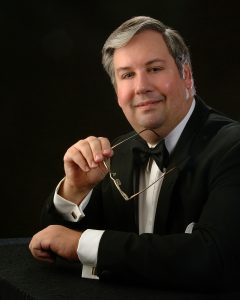
Duane EsterlyWith his planned gift to 含羞草传媒鈥檚 music department, Duane Esterly 鈥75 has come full circle in his musical life, helping to ensure that future students who share his passion can pursue similar dreams.

By the time he reached fourth grade, Esterly had teaching goals clearly in sight. A church choir director had named him a boy soprano and instilled in him a love for music, and his parents sang in the senior choir at Calvary Lutheran Church of Golden Valley, where he took organ lessons as a high school sophomore from the church organist. The senior choir at Calvary was directed by Dr. William Halverson, professor of philosophy at Augsburg from 1959 to 1967, and often performed anthems by Leland Sateren 鈥35, who headed Augsburg鈥檚 music department from 1950 to 1973 and directed the choir until retiring in 1979. By the time Esterly was ready to choose a college, it was evident that Augsburg was 鈥渁 good place to get a music degree.鈥

Such a pursuit was 鈥渃hallenging then. They had nowhere near the facilities they do now,鈥 Esterly recalls. In those days the music department was housed in a group of renovated churches deeded to Augsburg by dwindling congregations. Recitals were held in an old white church where one could also hear toilets flushing throughout the building. The organ studio was housed in a converted grocery store, and the band building was located across the freeway on Franklin Avenue in another former church with a questionable heating system during the winter months.

鈥淏y the time I graduated in 1975, I figured the college had better do something about their facilities in order to stay competitive,鈥 says Esterly.

His music education, however, was top-notch. He took voice lessons, sang in the choir, and learned much about choral technique, conducting, and interpreting text through music. As a senior, he directed the student production of Oklahoma, facing the formidable task of turning the old music building into a theater in a mere three weeks. He made good friends, such as Peter Hendrickson 鈥76, who became artistic director of the Masterworks Chorale and recruited Esterly, who sang for the Chorale from 1996 to 2015. 鈥淚鈥檓 very appreciative of the tools I learned while at Augsburg. They taught me quality, first and foremost,鈥 he says.

Esterly worked in sales administration, market research, training, and finance with such companies as Sandoz, Novartis, and Nestle for 35 years, but he never left music behind. For 27 years he taught privately鈥攁dults mostly, whom he deems often more difficult than elementary or high school students. He has held church music positions with various congregations throughout his working life, and, since retiring from the business world in 2016, he claims he is now 鈥渄own to one job.鈥 That means working with three different churches at present, fulfilling principal organist duties at each on alternating Sundays, directing a vocal choir and a handbell choir, and being on call for plenty of weddings and funerals.

When he is not working on choral arrangements for his choirs in his home office in Plymouth, Esterly fills his time with books, concerts, plays, flower and auto shows (in season), and dining out with friends. Because he has no children to inherit his financial legacy, he has chosen Augsburg鈥檚 music department as one of its worthy recipients. 鈥淚 am so pleased to see what鈥檚 happening there now. Almost all the professors I had are no longer living and my contemporaries are retiring, but I am very impressed with what I currently see,鈥 he says. 鈥淭heir degree of dedication is deep, and I believe in all the possibilities they can offer to the students to come.鈥

Accessibility to Education and an Open Community Inspires Graves Family Endowed Scholarship

Sam ’16, Hazen and Kathy Graves with President Pribbenow at their scholarship signing.

When Hazen and Kathy Graves toured Augsburg with their son, Sam Graves 鈥16, they immediately felt they had found the right place. 鈥淲e were totally impressed,鈥 says Hazen, a retired partner at the Faegre Baker Daniels law firm, where he advised nonprofit organizations and handled legal matters related to charities and charitable giving. 鈥淛ust walking through the campus, we found students very respectful, friendly, and eager to engage.鈥

They also found that Augsburg offered the unique assistance Sam needed as a young man with cerebral palsy who uses a power wheelchair. 鈥淎s we learned more about the support Augsburg offers to students with various kinds of challenges, we came to understand that Augsburg had been doing this for a long time, long before ADA,鈥 says Hazen. 鈥淭he University鈥檚 attitude鈥攖hat鈥檚 the way the world is, here we all are, let鈥檚 get on with it鈥攃ame through loud and clear, and it was reinforced as Sam went through four years there,鈥 he adds.

Education is a high priority for the Graves family. Sam had a very good experience at Minneapolis South High School, where he excelled in academics and played in South鈥檚 robust adapted athletics program. After graduation, however, the choices were more difficult.

鈥淪am is very bright and has always done well in school. One of our goals was to make sure he could really capitalize on that,鈥 says Hazen. He and his wife, Kathy, a principal in the communications and planning firm of Parenteau Graves, quickly learned that not every higher education institution was able to鈥攐r even seemingly wanted to鈥搒erve students with physical disabilities.

A tour of Augsburg was all it took. Sam agreed with his parents鈥 assessment and enrolled in 2012. He graduated with a degree in psychology in 2016. Now 26, Sam manages social media and creates digital content for the Minneapolis-based technology company Accessible360. He fondly recalls Augsburg鈥檚 CLASS program as well as his favorite teachers, Michael Lansing, Bill Green and especially his advisor, psychology professor Bridget Robinson-Riegler. 鈥淪he was really fun and really, really smart. Plus she talked about the Twins a lot,鈥 Sam says. An ardent sports fan, he is the co-author of the baseball blog 鈥淭wo Men On.鈥

Sam鈥檚 parents applaud Augsburg鈥檚 鈥済reat services, great students, great faculty, and great accommodations made for those with disabilities. And they appeared happy to provide them,鈥 Hazen says. 鈥淲e had the overarching feeling that Augsburg embraced differences and made sure everyone has an opportunity to get a good education.鈥

The idea of supporting Augsburg financially occurred to both Hazen and Kathy independently, and they decided to donate $50,000 to endow a scholarship. 鈥淭his is the most open community that I鈥檝e experienced anywhere, with the possible exception of South High, and it鈥檚 pretty clear that this attitude permeates the place,鈥 adds Hazen. 鈥淎ccess to higher education is a big issue, and we鈥檙e just doing our little part.鈥

Belief in Young Debaters Inspires Grant Dasher to Endow Augsburg’s MNUDL

Grant Dasher

Genocide in Darfur. United Nations peacekeeping missions in Syria. Those were only two of the relevant issues Grant Dasher tackled while on the debate team at Edina High School. But they made a lasting impression.

鈥淭hose issues are still relevant today, unfortunately,鈥 says Dasher, whose positive experience in the debate world has prompted him to donate $10,000 to endow 含羞草传媒鈥檚 Minnesota Urban Debate League. About half of his donation will be matched by his employer.

The opportunity to learn about topics that are both interesting and important to society is just one of the many benefits debate offers, Dasher explains. It also develops critical thinking skills, expands global knowledge, and provides a chance to become active in the school community. As with sports, debating in a league that also promises tournaments, awards, and trophies simply makes it more fun.

鈥淩esearch suggests that students who debate often pursue higher education and have better outcomes. There鈥檚 even evidence that debate may foster higher learning potential,鈥 adds Dasher, who earned a math degree at Harvard, consulted with the U.S. Digital Service at the White House, and is now a senior staff software engineer at Google. He also notes the positive effects debate has had on his career, as it has helped him work through issues, manage people, and articulate ideas clearly.

After graduating from college, Dasher became involved in Boston鈥檚 Urban Debate League, where he enjoyed meeting with and coaching the students as well as judging the debates. Now a resident of the Bay Area, he wanted to extend the same opportunities to students in his home state.

Dasher has fond memories of his debate coach, Joe Schmitt, a labor and employment attorney at Nilan Johnson Lewis, Minneapolis. 鈥淗e was a great coach. Although we had good relationships with our parents, he was a second father figure to all of us on the team. And we were pretty successful,鈥 says Dasher, who won the state tournament with his partner. 鈥淗e taught us learning skills and how to be effective. He also taught us how to use debate to become a better person. It was not just a competitive thing.鈥

Both Dasher and Schmitt are strong supporters of Augsburg鈥檚 MN UDL program, which debuted in 2004 and now supports more than 900 students at 39 partner schools across the Twin Cities. Led by executive director Amy Cram Helwich and faculty advisor Robert Groven, an Augsburg communication studies professor, the MN UDL boasts a 100 percent on-time high school graduation rate and 99 percent college acceptance rate among its debaters. The Augsburg Promise Scholarship also offers incoming first-year students full tuition if they have debated for three or more years, have a GPA of at least 3.25 and an ACT score of 20 or more, and are eligible for a Pell Grant.

鈥淒ebate is really valuable to people. I have seen firsthand the impact it can have on kids,鈥 Dasher says. 鈥淚 wanted to help the kids in Minnesota, both in rural areas and in the Cities, have that same experience I have had and seen.鈥